Aching Joints?
Aching Joints? You Might Think It’s Normal… But Is It?
Picture the scene: you get out of bed in the morning and your whole-body aches. Your joints feel stiff, and as you move around the bedroom, you feel decades older than you are. You find yourself wondering, Why do I ache so much? And perhaps even more importantly… is this normal?
The answer may surprise you.
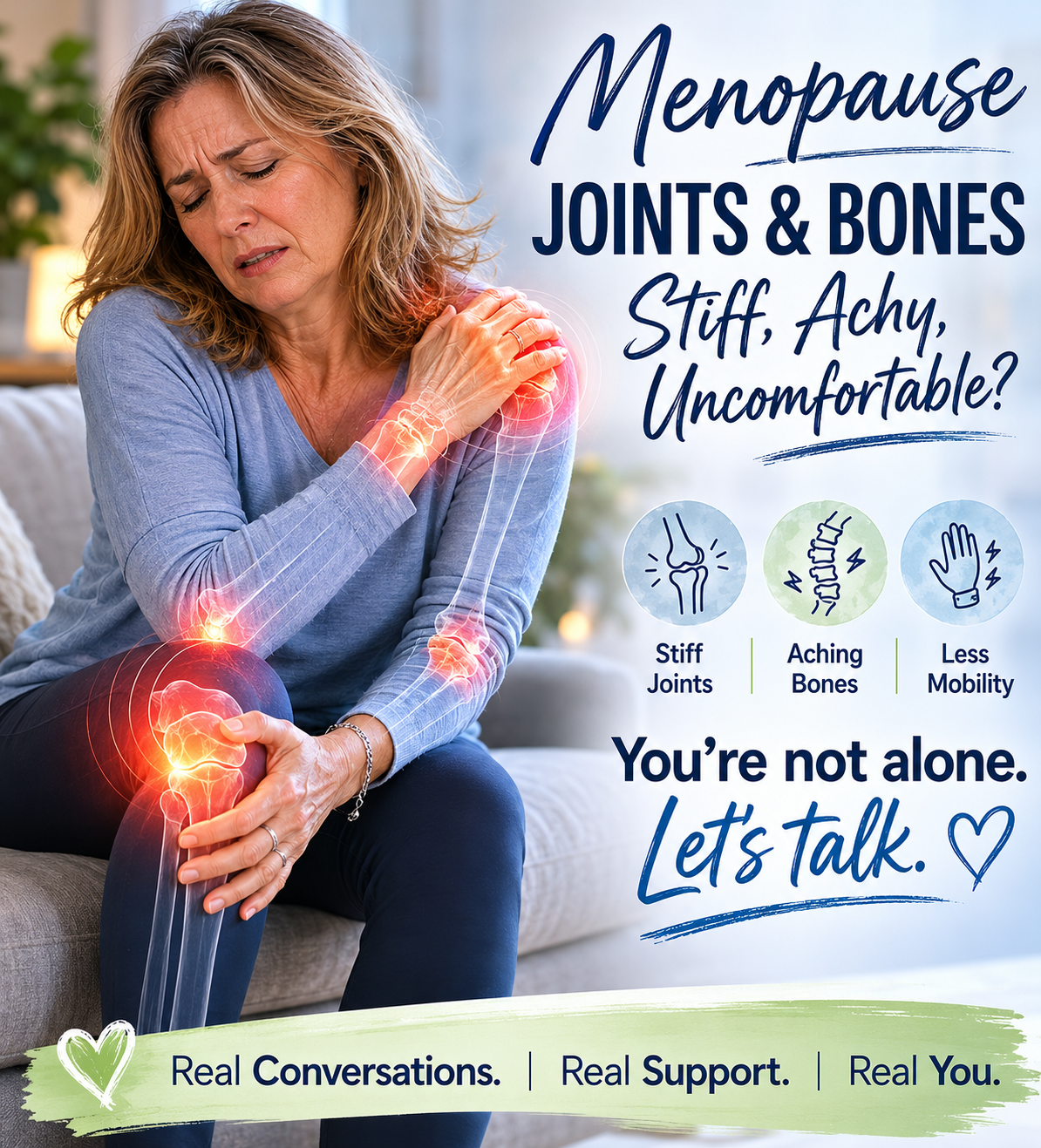
Joint and muscle aches are a very common symptom of menopause, yet many women don’t realise there could be a hormonal reason behind how they’re feeling.
Throughout my nursing career, I’ve met many women in midlife who experience painful, stiff joints. When I ask about it, many tell me they assume they have arthritis but often this hasn’t been formally diagnosed. In some cases, women have undergone scans and investigations, including private MRI scans, only to be told that no clear cause has been found. Have been prescribed painkillers and anti-inflammatory medications. Yes they help but what is the root cause of your aches and pains? This is what we need to find.
If you have been diagnosed with arthritis, that is of course different. But for many women, aching muscles and stiff joints are dismissed as simply something to put up with. It’s often accepted as “just part of getting older.”
But it doesn’t have to be.
Diane the Detective!
Finding the cause of the symptoms is the most important step. If you have previous injuries or other health conditions, your GP can help investigate these. However, menopause is often overlooked.
As oestrogen levels decline during menopause, many women develop joint pain, muscle aches, and stiffness. When hormone levels are replaced with appropriate treatment, symptoms can often improve significantly—and sometimes the results are quite remarkable.
A recent patient story
I recently saw a lady who had developed severe stiffness and pain to her hips and lower back. She had gym membership but she hadn’t been for weeks. It had reached the point where she could no longer do her dance, Pilates and weights. Losing that ability to exercise and socialise had a huge impact on both her physical health and her emotional wellbeing. She felt frustrated, isolated and low.
She had been taking multiple pain medications, and her GP had taken xrays referred her to Rheumatology. Despite investigations, no underlying cause was found, and she was left without answers.
By chance, she watched one of my menopause videos where I spoke about the link between menopause and joint pain. That prompted her to book an appointment with me.
During our consultation, it was clear how much stiffness she was experiencing
in her hips and lower back. She was understandably upset and worried that things would continue to worsen. After a full assessment, I prescribed HRT and arranged to review her three months later.
When I saw her again, the difference was incredible.
She was back at the gym, Pilates and feeling much more like herself. She told me she couldn’t believe the difference HRT had made, not just to her joints but to her general aches and pains, her energy levels, and her overall wellbeing.
Stories like hers are why these conversations matter.
Speaking to qualified healthcare professionals, such as Nurse Practitioners means we assess your health not just your symptoms. Recognised menopause training takes years. This ensures we understand your symptoms and explore treatment options.
Why Diane?
I have been nursing for 38 years and have extensive experience in women’s health, medicine, and menopause care. My aim is always to listen, assess your symptoms fully, and help you find the right support for you.
If you can relate to any of this, it may be worth asking yourself:
Could this be menopause?
Could I help you too?
If you would like to book an appointment with me to discuss your symptoms, explore treatment options, and see how I can support you, please get in touch.
